

FLAG OF ALL COUNTRIES
FLAG OF ALL COUNTRIES

-
Samples: LA CO MALI GIA RE NHAT HCM
- Manufacturing: INOX TINTA VIETNAM CORPORATION
- Commitment to quality: 24 Month Warranty
- Quantity Ordered Products: 1000
- Inox Product Price Quote Not VAT
Inox product details
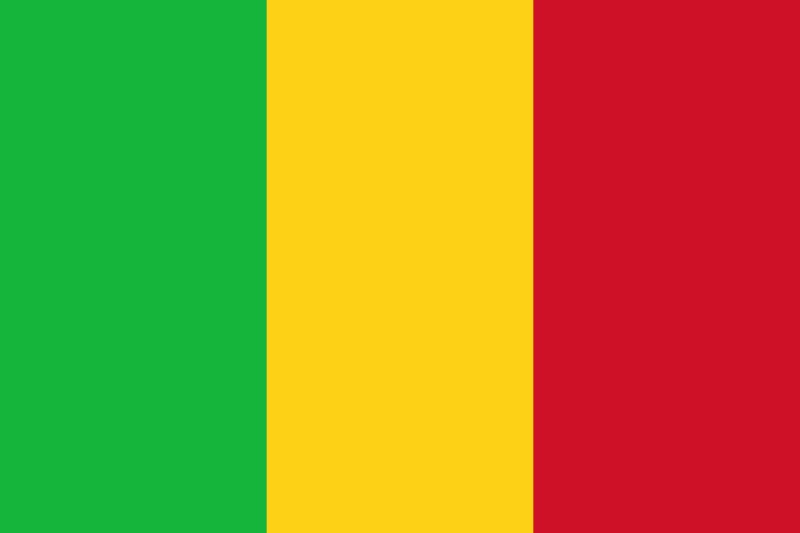
The cheapest Mali flag in HCM . The flag colors have many different meanings. Green represents the fertility of the land, yellow means purity and rich in minerals, red means "blood flowing" to gain independence from France.
The cheapest Mali flag in HCM . Like previous French-controlled territories in West Africa, Mali has chosen for its national flag the popular colors of green, yellow and red, which later became known as pan- Africa. African Democrats, an alliance of African delegates formed after World War II, used them as colors for the party. They are also characteristic of the flags of Ethiopia, Ghana and Guinea, which (along with Liberia) are the oldest of the independent African-African nations. The cheapest Mali flag in HCM .
In 1959, Mali linked its fortunes to the Senegalese League. Its constitution, adopted in January 1959, states that the flag of the federation and its member states is green-yellow-red vertical stripes with stylized black figures in center, hands in the sky. This symbol, called kanaga, originated from the Dogon people in Mali and was given a modern meaning by the Negative movement of Western African and Caribbean intellectuals. In 1960, when Senegal and Mali split into separate countries, followers of the Islamic orthodox movement in Mali protested the human form that was against the rules of Islam. Therefore, since March 1, 1961, the symbol has been dropped from the flag, and the simple tricolor represents the nation.
History of Mali
Formerly Mali was part of the three famous West African empires, which controlled the trans-Saharan trade route of transporting gold, salt, slaves, and other valuable items. Originally the area of present-day Mali was composed of Sahel kingdoms without geopolitical boundaries as well as a unique national identity. The earliest empire was the Ghana empire and was ruled by the Soninke people, who were a Mande-speaking ethnic group. The country expanded to West Africa from the 8th century to 1078, when it was conquered by the Almoravids.
The height of the Mali Empire
Later, the Mali Empire was established north of the Niger River, and reached its peak of power in the fourteenth century. During the period of the Mali empire, the ancient cities of Djenné and Timbuktu became centers of Islamic learning and commerce. The empire then collapsed due to internal divisions, and was replaced by the Songhai Empire. The Songhai people originated from what is now northwestern Nigeria. Songhai people have long existed in West Africa and are present as a major force against the rule of the Mali empire.
By the end of the fourteenth century, the Songhai gradually gained independence from the Mali empire and then expanded their influence and eventually took control of the entire eastern part of the Mali empire. Then the Songhai empire collapsed after the Moroccan invasion led by Judar Pasha in 1591. The collapse of the Songhai Empire marked the end of the region's role as part of the route. Commerce. However, after sea routes were established by Western powers, the trans-Saharan trade route lost its importance. The worst famine recorded between 1738 and 1756, killed about half of the population in Timbuktu.
During the colonial period, Mali was under French rule beginning in the late nineteenth century. By 1905, most parts of Mali were managed by French companies and were part of French Sudan, and in early 1959, Mali (then the Sudanese Republic) and Senegal united to form the Union. Mali state. The Mali Federation gained its independence from France on June 20, 1960. Senegal later withdrew from the federation in August 1960, which facilitated the establishment of an independent state of Mali on September 22. 1960. Modibo Keïta was elected the first president. Keïta immediately established a one-party state, on an independent socialist-oriented state with close ties with the East, and implemented nationalization to control the land's resources. country.
In November 1968, as Mali's economy continued to decline and stagnate, Keïta's government was overthrown in a bloodless coup conducted by Moussa Traoré. After the event, Mali was run by a military government with Traoré as president, who tried to reform the economy. However, all his efforts were rendered meaningless by political instability and devastating drought between 1968 and 1974, which killed thousands. The Traoré government also faced student riots that erupted in the late 1970s and three coup attempts. However, Traoré put down all opposition until the late 1980s.
During this period, the government continued to carry out economic reforms, but the growing discontent among the population. In response to the growing demands for a multi-party democracy, the Traoré government granted some limited political freedom, but refused to establish a full democratic system. In 1990, opposition movements continued to emerge, and the situation was further complicated by ethnic violence in the north following the return of many Tuareg to Mali.
The anti-government movement eventually led to a coup in 1991 that led to the establishment of a transitional government, and a new constitution.
In 1992, Alpha Oumar Konaré became the first Mali president to win a multi-party, democratic election. And in his re-election in 1997, President Konaré adopted a series of economic and political reform policies, fighting against corruption. In 2002, he resigned and through a democratic election, the Malian government was run by Amadou Toumani Touré, a retired general who was the military leader of the coup in 1991. Today. , Mali is one of the countries with the most political and social stability in Africa.The cheapest Mali flag in HCM .
Processing of stainless steel - Similar products

Products
inox - Featured Products







STAINLESS STEEL HOT NEWS

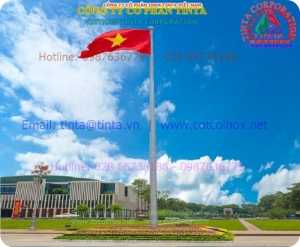
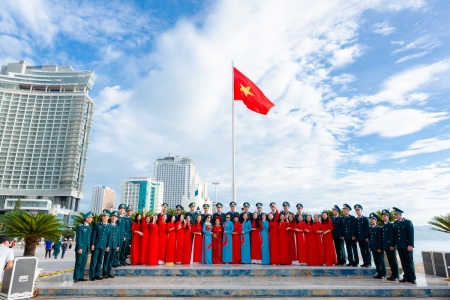
A Historic Parade: 50 Years of Southern Liberation with TinTa Flagpoles
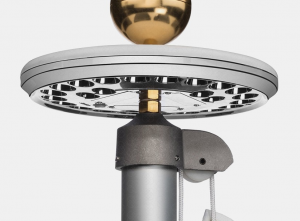
What is a 360-degree rotating stainless steel flagpoles

We would like to introduce to readers about stainless steel flagpoles

Install an office flagpole in a diplomatic meeting

Flagpole office good meeting place it is so important
tinta's Customer support
Mr Hoang Thai (Vietnam/English)
Ms Thùy Dung (Vietnam / English)
Hoàng Gia Phú (Mr)
Mr Viết Sáu (Vietnam/English)